
PATNA HIGH COURT
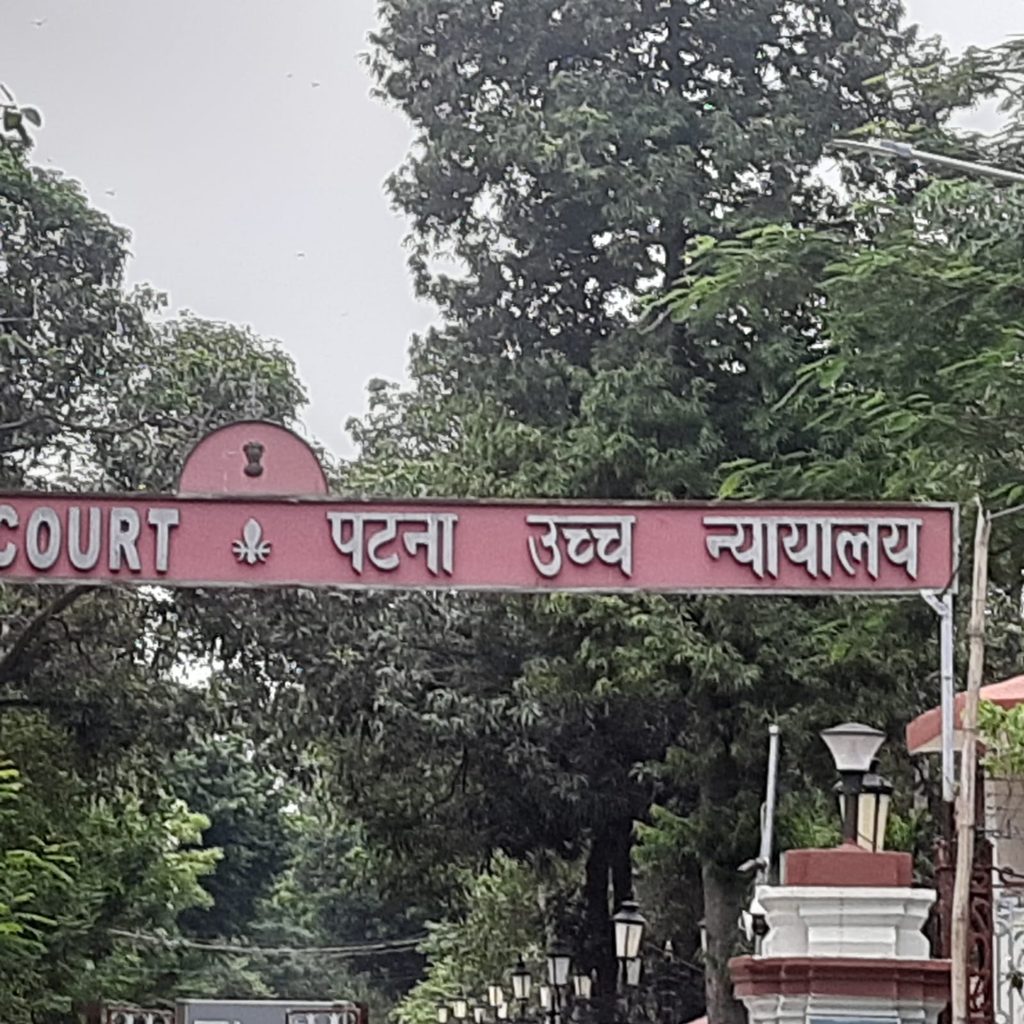
The High Court of Judicature at Patna, seated at BaileyRoad in the heart of the State capital, is among the oldest High Courts of independent India and one of the most consequential judicial institutions of eastern India. Raised in 1916 out of the newly separated Province of Bihar and Orissa, it has, over more than a century, both shed and shaped jurisdictions — losing Orissa in 1948 and Jharkhand in 2000, while producing judges who rose to be Chief Justices of India and jurists who shaped the freedom movement itself. This note traces that journey under six heads: the Court’s establishment, the bifurcations that shaped its present-day jurisdiction, its landmark judgments, the legal figures associated with it, its present-day working, and the notable places of Patna town connected with its legacy.
Historical Background and Establishment
Until 1912, the territories of Bihar and Orissa formed part of the Bengal Presidency, and all judicial appeals from the Patna Judgeship and other Bihar courts lay to the High Court of Judicature at Fort William in Calcutta. By a proclamation of the Governor-General of India dated 22 March 1912, Bihar and Orissa were carved out of the Bengal Presidency and elevated to the status of a separate Province — a step that made the creation of an independent High Court for the new Province inevitable.
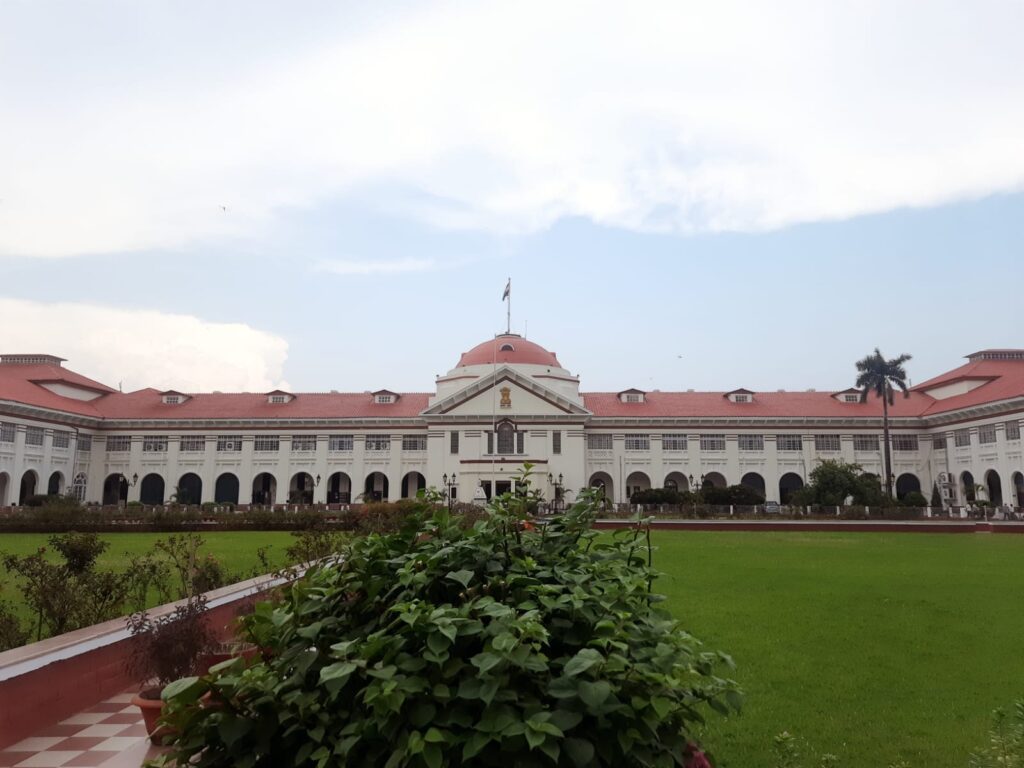
The foundation stone of the High Court building was laid at Bankipore on 1 December 1913 by the Viceroy and Governor-General, Lord Hardinge of Penshurst. By Letters Patent dated 9 February 1916, issued under Section 113 of the Government of India Act, 1915, the High Court of Judicature at Patna was formally brought into existence, with the earlier jurisdiction of the Calcutta High Court over the Province ceasing to operate from 26 February 1916, the date the Letters Patent were published in the Gazette of India. The High Court building was formally opened by Lord Hardinge on 3 February 1916, and the Court actually commenced its work on 1 March 1916, its Judges appearing that morning in full ceremonial court dress — red gowns, wigs, black knee-breeches, black silk stockings and buckled shoes.
Sir Edward Maynard Des Champs Chamier, Kt., was sworn in as the first Chief Justice, presiding over an initial Bench of six puisne Judges: Saiyid Sharfuddin, Edmund Pelly Chapman, Basant Kumar Mullick, Francis Reginald Roe, Cecil Atkinson and Jwala Prasad. As the ancient city of Pataliputra thus acquired a High Court of its own, the new Court exercised jurisdiction over the whole of the Province of Bihar and Orissa, holding periodic Circuit sittings at Cuttack for the convenience of litigants from the Orissa districts.
Bifurcation into Several Parts
The territorial jurisdiction of the Patna High Court, like that of the district judgeships beneath it, has been steadily reduced over the decades through successive reorganisations of the eastern Indian provinces and, later, of the State of Bihar itself:
Orissa High Court (1948) — although Orissa had become a separate Province in 1936, no independent High Court was created for it at the time, and the Patna High Court continued to exercise jurisdiction over Orissa’s territories (through its Circuit Court at Cuttack) until 26 July 1948, when a separate High Court was formally inaugurated for Orissa under the Orissa High Court Order, 1948.
Circuit Bench at Ranchi (1972) — to serve the Chota Nagpur and Santhal Parganas divisions of southern Bihar, a Circuit Bench of the Patna High Court was established at Ranchi on 6 March 1972.
Permanent Bench at Ranchi (1976) — the Ranchi Circuit Bench was converted into a Permanent Bench of the Patna High Court with effect from 8 April 1976, by the High Court at Patna (Establishment of a Permanent Bench at Ranchi) Act, 1976.
Jharkhand High Court (2000) — upon the reorganisation of Bihar and the creation of the new State of Jharkhand on 15 November 2000 under the Bihar Reorganisation Act, 2000, the Ranchi Bench was separated altogether and became the independent Jharkhand High Court, taking with it thirteen of the twenty-nine judgeships that had, till then, functioned under the Patna High Court’s superintendence.
Alongside these larger territorial bifurcations, the number of judgeships under the Patna High Court’s own administrative control grew steadily through the twentieth century, with new judgeships created for Hazaribagh (1949), Dhanbad (1956) and Singhbhum/Chaibasa (1960), among others — all of which passed to Jharkhand in 2000. What remains today is a High Court whose jurisdiction is confined to the State of Bihar alone, presiding over a sanctioned strength of 53 Judges and the network of district judgeships — including Patna, Muzaffarpur, Darbhanga, Nalanda, Jehanabad and the rest.
Modern / Present Situation
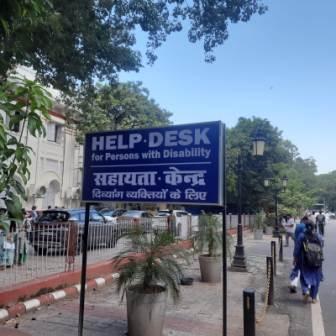
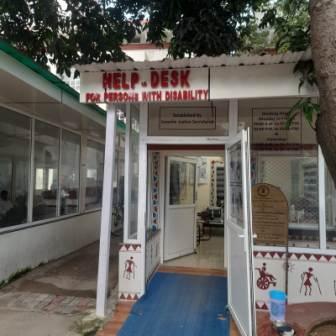
The Patna High Court today functions with a sanctioned strength of 53 Judges, its jurisdiction confined, since the creation of Jharkhand in 2000, to the State of Bihar alone. It exercises original, appellate and writ jurisdiction, and continues to be the apex forum of appeal from every district judgeship in the State — Patna, Muzaffarpur, Darbhanga, Nalanda, Jehanabad, and the rest. In April 2015, the Court celebrated its Centenary, an event inaugurated by the then President of India, Shri Pranab Mukherjee, and attended by the then Chief Justice of India, the Governor of Bihar, and the then Chief Justice of the Patna High Court.
Like other constitutional courts, the Patna High Court has progressively modernised its functioning through the following measures:
Digitisation of case records, e-filing facilities, and free-text and case-number based online judgment search;
Live-streaming and video-conferenced hearings, expanded significantly since the COVID-19 pandemic;
Mediation and Alternative Dispute Resolution mechanisms under the Bihar Civil Procedure (Mediation) Rules, 2008 and allied Rules;
Case-flow management Rules, 2008, for both the High Court and the subordinate courts, aimed at reducing pendency;
Continuing exercise of suo motu and PIL jurisdiction on matters of governance, public health, corruption and child protection, as illustrated above.
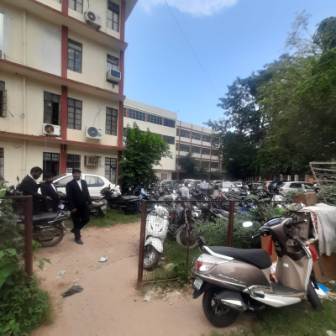
The Court’s heavy pendency — a feature common to most High Courts in India — remains a continuing administrative concern, addressed through periodic special sittings, Lok Adalats, and proposals for expanded court and residential infrastructure for judges and staff. The large and active Patna High Court Bar Association, together with the Bihar State Bar Council, continues to be one of the most significant professional bodies of lawyers in eastern India.
Prominent Legal Figures Associated with the Court
Sir Edward Maynard Des Champs Chamier
The Court’s first Chief Justice (1916–1917), remembered also for a mark of judicial independence: at the inauguration of the High Court building in 1916, he pointedly did not invite either the Lieutenant Governor or the Viceroy to preside over the Bench’s own ceremonial proceedings.
Pandit Lakshmi Kant Jha
In a rare instance in Indian judicial history, Pandit L.K. Jha, then Advocate General of Bihar, was directly elevated to the office of Chief Justice of the Patna High Court — the first and, to date, the only such direct appointment of a sitting law officer to a Chief Justiceship in India.
Justice Bhuvaneshwar Prasad Sinha
Enrolled at the Patna High Court Bar in 1922, B.P. Sinha rose to become a Judge of the Patna High Court in 1943, later serving as Chief Justice of the Nagpur High Court and finally as the sixth Chief Justice of India (1959–1964) — one of the Patna Bar’s most distinguished exports to the highest judicial office in the country.
Justice Lalit Mohan Sharma
Educated and enrolled entirely within the Patna legal ecosystem — B.A. and B.L. from Patna University, and practice at the Patna High Court from 1950 — Justice Sharma served as a Judge of this Court from 1973 to 1987 before elevation to the Supreme Court and, ultimately, appointment as the twenty-fourth Chief Justice of India in 1992.
Shri L.N. Sinha
Educated at Patna Law College, L.N. Sinha served as Advocate General of Bihar before becoming Solicitor General and later Attorney General of India (1979–1983); his grandson, Justice Partha Sarthy, sits as a Judge of the Patna High Court today, illustrating the multi-generational character of Bihar’s legal families.
Justice Rekha Doshit and Justice Gyan Sudha Misra
Justice Rekha Doshit holds the distinction of being the first woman Chief Justice of the Patna High Court, while Justice Gyan Sudha Misra became the first woman judge from Bihar to be elevated to the Supreme Court of India — both marking milestones for women in the higher judiciary that trace their roots to the Patna Bar and Bench.
The Early Patna Bar
As detailed in the companion note on the District Court at Bankipur, the Patna High Court’s early decades drew on — and, in turn, nurtured — an extraordinary generation of lawyer-statesmen: Sir Ali Imam (elevated Judge of this Court in 1917), Syed Hasan Imam, Sir Sultan Ahmed, Maulana Mazharul Haque, Dr. Sachchidananda Sinha and Dr. Rajendra Prasad among them, several of whom shifted their practice to Patna specifically upon the High Court’s founding in 1916.
Landmark Trials and Judgments
Kameshwar Singh v. The State of Bihar (1951) — the Zamindari Abolition Case
Among the most consequential judgments ever delivered by an Indian High Court, this case arose when the great zamindars of Bihar — including the Maharajadhiraja of Darbhanga, Sir Kameshwar Singh — challenged the Bihar Land Reforms Act, 1950, which sought to abolish the zamindari system. On 12 March 1951, the Patna High Court, in a judgment authored principally by Shearer, J. and Das, J., struck down the Act as violative of Article 14 of the Constitution, holding that its compensation scheme discriminated between similarly placed zamindars. The ruling created a nationwide constitutional crisis for agrarian reform legislation, and the resulting appeal — The State of Bihar v. Maharajadhiraja Sir Kameshwar Singh — was among the principal reasons Parliament enacted the very First Amendment to the Constitution of India in 1951, inserting Articles 31A and 31B and the Ninth Schedule to shield land-reform laws from judicial review on grounds of fundamental rights. Few single judgments of any Indian High Court can claim to have altered the text of the Constitution itself so directly.
The Fodder Scam PIL (1996)
Acting on public interest litigations — including one moved by opposition leaders Sushil Kumar Modi, Saryu Rai and Shivanand Tiwari, and following directions of the Supreme Court on a related petition — the Patna High Court, in its order of 11 March 1996, directed the Central Bureau of Investigation to take over the probe into what came to be known as the multi-crore “fodder scam” in the State’s Animal Husbandry Department. The CBI’s resulting investigation, spanning 64 cases and implicating the then Chief Minister, Lalu Prasad Yadav, and dozens of others, remains one of the most significant corruption investigations in independent India’s political history, and it was this High Court’s order that set the entire prosecution in motion.
The Muzaffarpur Shelter Home Case (2018)
Following disturbing revelations of sexual and physical abuse of minor girls at a State-funded shelter home in Muzaffarpur, the Patna High Court intervened and directed a CBI investigation, leading to convictions of the main accused and prompting nationwide scrutiny of the regulation of child-care institutions — a landmark instance of the Court’s protective jurisdiction over the rights of children.
Other Notable Interventions
Among more recent proceedings, the Court’s suo motu cognisance of the collapse of healthcare infrastructure in Bihar during the COVID-19 pandemic (2021), its 2010 order directing a CBI probe into an alleged Rs. 11,000-crore State welfare-fund scam, its examination of the constitutional propriety surrounding the 2014 resignation of Chief Minister Nitish Kumar, and its scrutiny of the Bihar Prohibition and Excise Act, 2016, illustrate the continuing reach of the Court’s writ jurisdiction into the administration and governance of the State.


Important Places in and around Patna Town
The High Court’s own heritage building at Bailey Road sits amid a cluster of institutions central to Bihar’s public and cultural life:
- The Patna High Court building a stately colonial-era structure, its foundation laid in 1913, and a heritage landmark in its own right.
- Raj Bhawan (Governor’s House) and the Bihar Vidhan Sabha (Legislative Assembly) — the seats of the State’s executive and legislative branches, close to the High Court, together forming Patna’s administrative core.
- Patna District Court, Bankipur — the principal trial court from which most appeals to the High Court originate, described in a companion note.
- Golghar — the iconic domed colonial granary (1786), one of Bankipur’s most recognisable landmarks.
- Patna University and Patna Law College — the alma mater of a remarkable number of the Court’s own judges and Chief Justices of India.
- Khuda Bakhsh Oriental Library — a repository of rare Islamic manuscripts in Bankipore, historically linked to several early members of the Patna Bar.
- Bankipore Club — established in 1864, one of India’s oldest social clubs, long favoured by the Bench and Bar of the High Court.
- Gandhi Maidan — the historic public ground associated with major events of the freedom movement and public life in Bihar.
- Buddha Smriti Park — built on the site of the former Bankipur Central Jail, where several freedom fighters who later appeared before, or were associated with, this Court’s Bar were once imprisoned.
- Patna Museum and the Bihar Museum — housing important archaeological and historical collections, including Mauryan-era artefacts from ancient Pataliputra.
- Kumhrar — the excavated remains of ancient Pataliputra, a short distance from the modern High Court complex
Note: This compilation draws on the official history published by the e-Committee, Supreme Court of India, the Patna High Court’s own published history, and well-documented public accounts of the Kameshwar Singh case, the fodder scam PIL, and the Muzaffarpur shelter home case. Names of serving judicial officers and administrative details may be verified against the High Court’s official website (patnahighcourt.gov.in) for the latest position. The viewer discretion is strictly recommended before relying on any of the date